
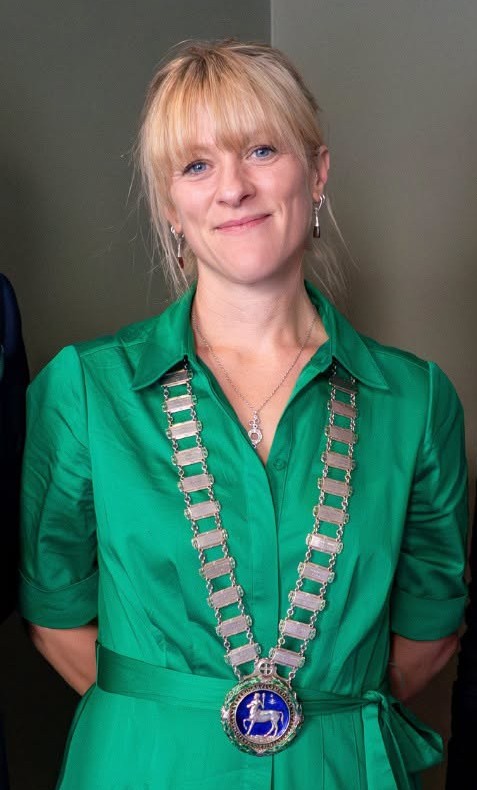
Gwen Rees BVSc PhD FHEA FRSM FRCVS is a vet, researcher, lecturer and President of the British Veterinary Association whose career has taken her from mixed practice in the UK and cattle practice in New Zealand to research, veterinary education and shaping policy.
After her farm animal career unexpectedly ended due to injury, Gwen followed a new path, completing her PhD, becoming an advocate for antimicrobial stewardship and helping to establish Arwain DGC in Wales.
Please summarise your journey / biography:
I grew up in South Wales and wanted to be a vet for as long as I can remember. I remember there are photos of me aged about three with a stethoscope, diagnosing various ailments in long-suffering teddy bears! So becoming a vet is exactly what I did! I graduated from Liverpool vet school in 2009 and started out working in mixed practice in the UK.
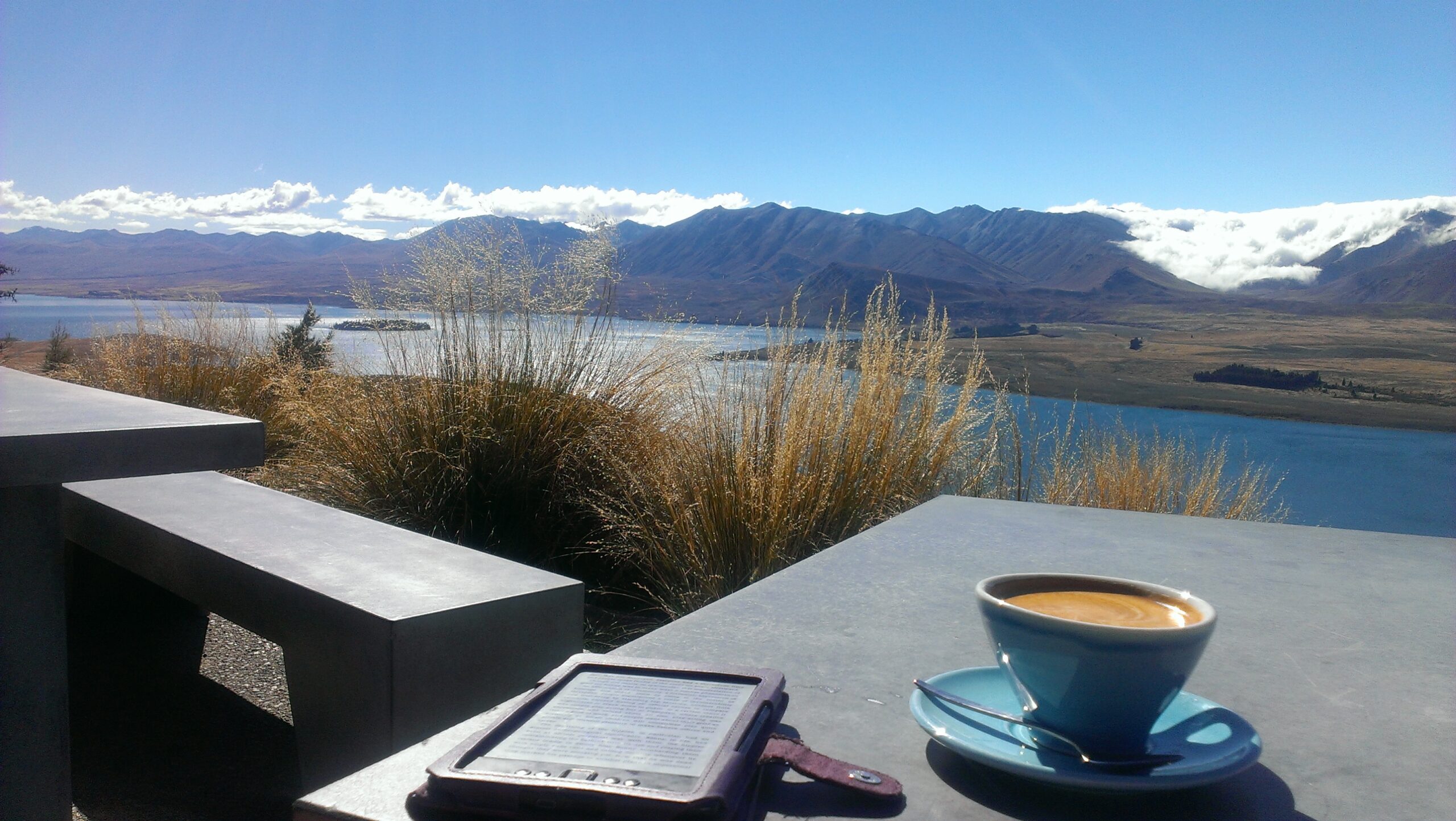
I then moved to New Zealand in 2013, where stayed for two years and worked as a cattle vet in Central Otago. It was here that I developed a lifelong affection for New Zealand, dairy cows and expensive wine.
I came back to the UK in 2015 because of a shoulder injury that meant I could no longer continue in farm animal practice. At the time, that felt like a huge disaster, but it ultimately just pushed my career in a different direction.
In 2019, I completed a PhD which looked at veterinary prescribing, medicines use and farmer decision-making and sparking a growing interest in social science, antimicrobial stewardship and policy. Since then, I have played a part in helping to establish Arwain DGC in Wales, which brings vets, farmers and others together around responsible antibiotic use. Since my PhD, I have been working across a variety of research, teaching and policy roles, including some work with Welsh Government. I also lecture in veterinary science at Aberystwyth University, having been the first lecturer appointed to the newly established School of Veterinary Science.
Most recently, I became President of the British Veterinary Association this year – not something that featured in the life plan of the three-year-old with the stethoscope!
Describe your typical day from waking to sleeping
There isn’t really a typical day, which is probably just as well because any description involving a serene 5am routine, journalling and chia seeds would be a complete lie!
If I’m at home, the day starts with coffee, children, school bags, somebody being unable to find a shoe, and more coffee. Work is usually a mixture of emails, meetings, teaching, writing, policy work and talking to people.
If I can, I’ll escape at some point for a run, preferably with the dog in the forestry. On a good home-working day I might collect eggs from the hens and ducks and convince myself that this makes me self-sufficient.
Evenings are dinner, children, general domestic chaos and then, because I’m naturally a night owl, often a slightly unfortunate second wind at about 9pm when my brain suddenly decides it would now like to do some proper work.
I usually finish the day reading fiction, generally later than I should.
How would you describe yourself in a sentence?
I would say that I’m curious, opinionated, enthusiastic, slightly chaotic, and generally incapable of leaving an interesting problem alone.
How would others describe you in a sentence?
“She knows her own mind and she’s not afraid to use it” – I think it’s probably both a compliment and a warning…
Meaningful change is rarely achieved by any one person having the answer. It comes through relationships, trust, listening, disagreement, iteration and occasionally very long meetings.
What has been your top success and what have you learned from this?
I’d say it’s probably helping to develop Arwain DGC, the antimicrobial stewardship programme in Wales. I’m proud of what it achieved, but I’m even more proud of how we did it. It brought vets, farmers, researchers, industry and government together and treated the people who would actually have to make changes as partners rather than as the recipients of somebody else’s clever policy.
One of the things that came from that was a voluntary code of conduct for farm vets around responsible antibiotic prescribing. It worked because the people it was written for had helped shape it and could see themselves in it.
The biggest lesson for me was that meaningful change is rarely achieved by any one person having the answer. It comes through relationships, trust, listening, disagreement, iteration and occasionally very long meetings. It has profoundly influenced how I approach policy now. I am instinctively suspicious of solutions developed for people without involving them.
What has been your biggest challenge, setback or failure and how have you overcome it? How did you grow or change as a result?
There have been many, across all areas of life. But the biggest one was not getting into vet school first time around. I didn’t get the grades by a very minor margin and had to reapply. At the time, it was devastating and I felt that all I had ever wanted had been taken from me. With the benefit of hindsight it truly was one of the best things to happen to me. I decided to attend a different university despite being offered a place again the following year (partly because I was bitter about being rejected and I’m not above being petty!) and I think that I ended up at a university far better suited to me where I made friends for life and was taught by some of the legends of the profession.
I spent a year doing bar work and travelling a bit and just lived a life before starting university. I processed my own feelings about failure and learned lessons I have used ever since. I wouldn’t be who I am now if that hadn’t happened, and for that I am grateful.
What compromises have you had to make and what, if anything, could have helped
Hmmm. This is such a good (and tricky) question. I think I’ve learned with time that it really is impossible to be a woman and “have it all”. I have young children. I have hobbies and passions and a life outside of work, and I have a career that I love. I don’t think it is possible to operate at 100% across all those domains, all the time. So, I’ve had to compromise on all of them at one point or another, I think.
Most of the time it’s my life outside of work that loses out. Some of the time it’s the children. Some of the time it’s work opportunities. I think I’ve found as healthy a balance as possible, but it would be irresponsible to pretend I have it all. No one does – we just compromise differently at different times and do the best we can with what we have!
What advice would you have given to your younger self, that you would now give to others wanting to follow your path?
I would tell her to trust her intuition.
I think I always have followed mine, but usually only after an enormous amount of internal debate about whether I was being reckless, unrealistic or just plain wrong. Looking back, the decisions that felt instinctively right — professionally and personally — have generally taken me somewhere interesting, even when they made very little sense on paper. That has stood me in good stead and led me to where I am today. I would tell my younger self that she knows herself better than she thinks she does, and to have the courage of her own convictions.
I couldn’t have got where I am today without…
The people who helped me become the person I am – a large and eclectic group of people!
Professor Kristen Reyher, my mentor, PhD supervisor, and now also firm friend. She showed me the value of collaboration, fundamentally changed the direction of my career and opened up a world of research and thinking I didn’t know existed.
I’ve also been extraordinarily lucky in my academic collaborators and colleagues. Almost everything I’m proudest of has been done with other people, usually people who know things I don’t and are willing to challenge me.
Then there are my friends, who have known me through different versions of myself and keep me firmly (and occasionally brutally) grounded.
And my family, who absorb a fairly ridiculous amount of logistical disruption because I keep agreeing to do things. So unfortunately, the evidence suggests that I am not, in fact, entirely self-made.
The decisions that felt instinctively right — professionally and personally — have generally taken me somewhere interesting, even when they made very little sense on paper.
What are your three top likes?
1. Central Otago Pinot Noir
This makes me sound like a total wine snob. I’m really not and I will cheerfully drink most things labelled wine. But I lived in Central Otago for a year and unfortunately developed a particular love of Pinot Noir from Bannockburn, thereby acquiring a preference completely disproportionate to my normal level of sophistication.
2. Excellent music and dancing with old friends
Preferably something slightly alternative, ideally live, and absolutely not somewhere that requires me to behave elegantly. Few things make me happier than a gig, a festival, or dancing very badly with the people I’ve known for years.
3. Getting completely lost in a novel
I read a lot for work, but almost none of it is what I would voluntarily choose to read at bedtime. Give me excellent fiction, a sofa, a cup of coffee or a glass of wine, and several hours in which nobody needs anything from me and I am extremely happy.
What are your three top dislikes?
1. Being patronised
Probably my greatest dislike. People can look at you, hear your accent or make assumptions about where you come from and decide quite quickly what they think you know. I know other people experience this in much more significant ways than I do, but as a woman from a relatively poor town in South Wales I have certainly been underestimated when people first meet me. I like to think this generally resolves itself fairly rapidly once I open my mouth.
2. Mornings
I am a committed night owl trapped in a society designed by morning people. During my PhD, when largely allowed to manage my own time, my natural schedule involved waking at about 10am, spending a couple of hours staring at a wall drinking coffee, becoming vaguely functional in the afternoon, and then discovering at 7pm that I was suddenly capable of exceptional intellectual productivity until approximately 3am. Children and employment have rather inconsiderately put a stop to this. I now cope through complaining and drinking caffeine.
3. Avocado
I have tried. Yuck.
What is the most helpful book you’ve read and why?
I’m going to cheat slightly with the word “helpful”.
I’m not really one for self-help books, and I read very little non-fiction for pleasure. My working life already involves quite enough scientific papers, reports and policy documents, so when I read voluntarily I want somebody to tell me a story.
My top three books are quite literary and pretentious – The God of Small Thigns by Arunhati Roi, We The Drowned by Carsten Jensen and The Goldfinch by Donna Tartt. But when it comes to most helpful? Honestly, I could probably choose almost anything by Terry Pratchett. People can be terribly judgemental about his books, which I think is their loss. Beneath the comedy, witches and absurdity, his books are extraordinarily perceptive satires about people: power, prejudice, institutions, responsibility, stupidity, kindness and the strange ways societies work.
I think fiction often teaches us more about humanity than books that set out explicitly to explain it. Pratchett just has the added advantage of making you laugh while he’s doing it.
For exclusive access to more stories like this, subscribe to our monthly newsletter.
You may also like:
Veterinary Woman Role Model – Mel Julian, BVetMed CertAVP (Cattle) MRCVS
Veterinary Woman Role Model Profile – Silvia Auxilia
Veterinary Woman Role Model Profile – Liz Mullineaux