

VetLed are running their Civility Saves Lives campaign once again this year, and it’s in full swing!
Developed in collaboration with the campaign set up by human healthcare professionals, including TED talk and Veterinary Human Factors Conference 2023 Keynote speaker Dr Chris Turner, Civility Saves Lives aims to educate and train members of the veterinary profession so that they understand what constitutes incivility in the workplace and are aware of the potential negative impact of both co-worker, and client, incivility.
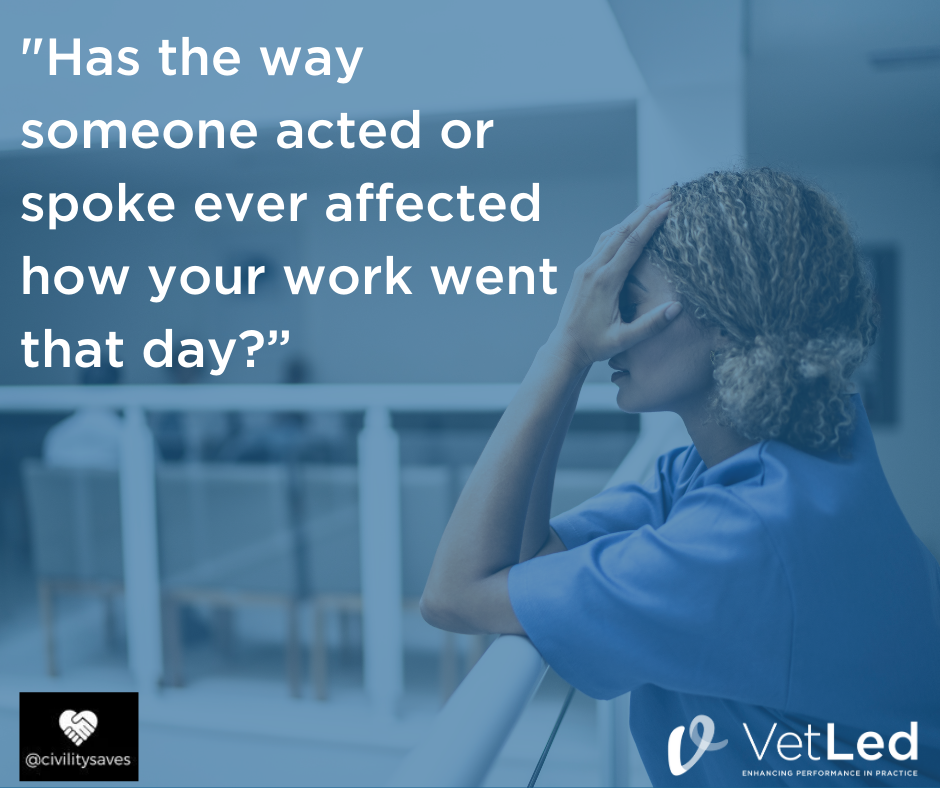

Incivility is defined as rude or unsociable speech or behaviour such as talking over someone, being uncooperative, belittling, aggression, shouting, undermining and more. The most important thing to remember is that rudeness is defined by how the recipient interprets it, regardless of the intent. Rudeness can take many forms. It can be insidious or blatant and can include verbal aggression, blaming, inappropriate humour, closed body language, public humiliation and many other guises.
Over time, incivility has been shown in research to significantly impact upon team wellbeing, and even patient outcomes! The statistics from associated research are startling (Porath and Pearson, 2013).


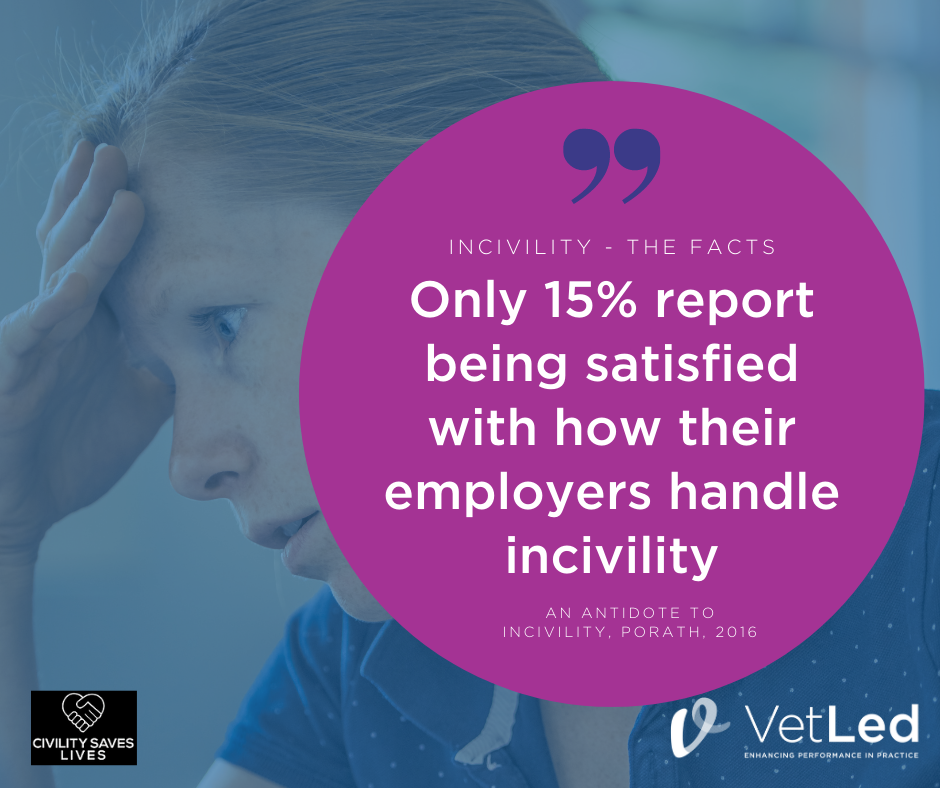
We can feel that rudeness and incivility is “just part of the job” in a stressful workplace. But the statistics show that developing civility is critical to performing at our best and thus providing the highest standards of patient care.
Porath and Pearson 2013 found that:
80% of recipients of incivility lose time worrying about it afterwards, 38% reduce the quality of their work (deliberately) and a huge 78% reduce their commitment to work.
When considering our veterinary businesses, we must consider the wider effect of incivility among our team members. It has been shown that (in line with the statistics demonstrated in human healthcare) our clients may be “75% less enthusiastic about the organisation after witnessing incivility”.
So what can we do about it?
Individual:
Be aware of the impact of our own thought/actions/words
Acknowledge our responsibility to ease the experience of others
Make an effort to adopt and exhibit civil behaviour as a non-negotiable part of our character
Ask yourself, “Could what I am saying be interpreted as rude?” If yes, apologise, if only to avoid being misunderstood
Team:
Excel in teamwork to reduce external stressors which may lead to incivility
Call it out with compassion
Organisation:
Consider adopting a zero-tolerance policy
Ensure disclosed core values are upheld
Avoid employing those who have exhibited these behaviours in the past

The VetLed Civility Saves Lives campaign does more than raising awareness and improving understanding of incivility. VetLed also provide practical tools and tips to help improve civility in the workplace, delivered as part of their civility training workshops with practice teams.
Access resources and further information on Civility Saves Lives.
For exclusive access to more stories like this, subscribe to our monthly newsletter
You may also like:
3 Key Takeaways from the Veterinary Human Factors Conference
Safe to Speak Up: An interview with Helen Silver-MacMahon
What’s in a name: the different styles of leadership