

Practice teams gathered in Birmingham for SPVS Congress 2023, where over 500 people benefited from a wealth of non-clinical CPD supporting the theme of ‘Thriving in Practice’ in streams on team dynamics, self development, practice management, leadership and finance. A busy exhibition and social programme provided ample opportunities for conversations with suppliers and organisations, and networking with colleagues from across the profession.
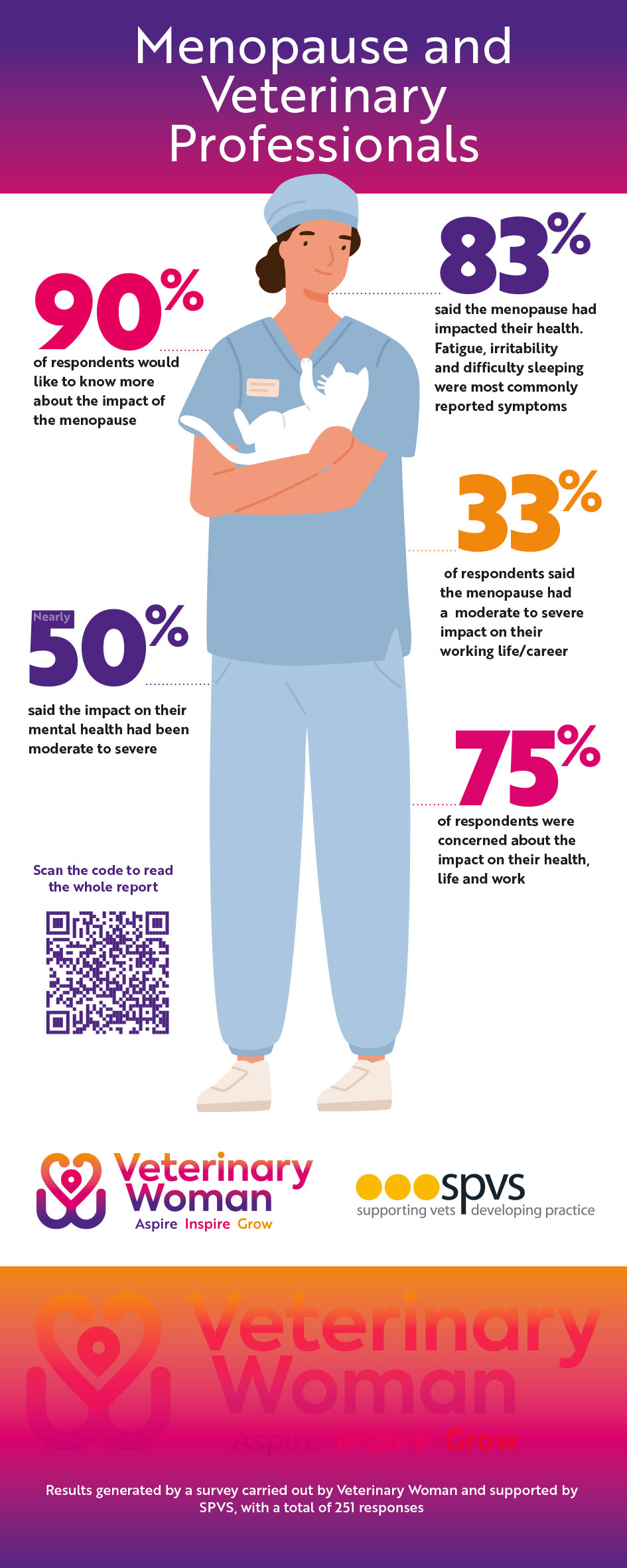
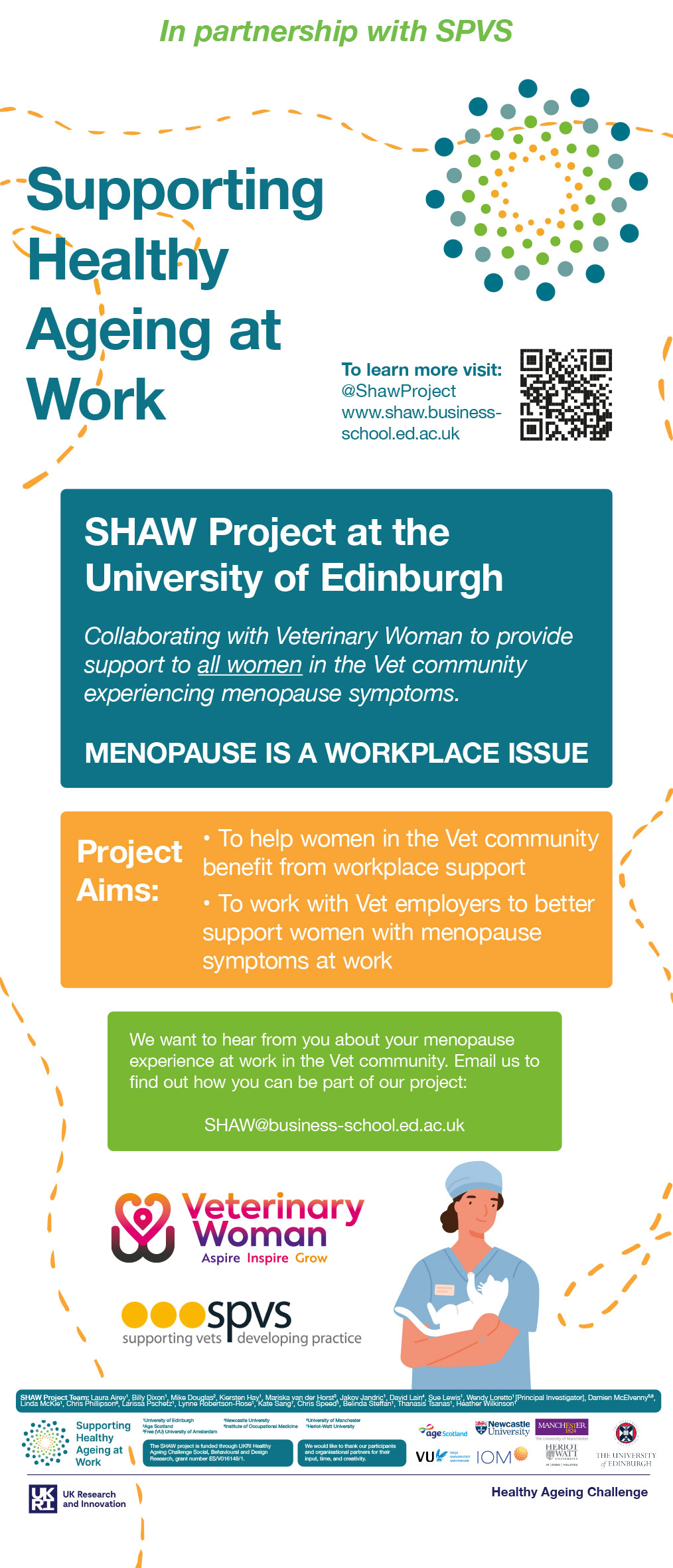
The Veterinary Woman team went along to champion the Menopause in the Veterinary Profession Report, and invite women to take part in ongoing research from Belinda Steffan at the University of Edinburgh Business School’s Supporting healthy ageing at work (SHAW) project, which is exploring menopause as a ‘hidden health’ issue at work and co-creating interventions to support menopause in practice. To get involved by sharing your experience of menopause in the workplace, please contact: bsteffan@ed.ac.uk
As we catch our breath after an action-packed event, we take a look at some of the highlights of SPVS Congress 2023:
Diversity, Equality and Inclusion
Claire Hodgson, BVCIS; Issa Robson, BVEDS and Tobias Hunter, BVLGBT+ discussed active allyship and developing diversity and inclusion, discussing the importance of this in helping all members of the practice team to feel a sense of belonging and be able to thrive.
Responding to questions from the audience on identifying strategies for increasing diversity in practice, they explained how allies need to organise a safe situation within their organisation before they can hope to improve diversity. “There is a need for the community to know that diversity is welcomed in organisations to attract more people from diverse backgrounds.”
“There is a need for the community to know that diversity is welcomed in organisations to attract more people from diverse backgrounds.”
Tobias explained that practices require dedicated resource to improve diversity, making use of professional DEI consultancy and staff training. “Individual advocates for DEI are often close to burnout as it takes resources. You need to pay for expertise.” They also advised staff in practices to “Find allies within your workplace. Find people in your organisation with the same aims.”
Summing up how practice culture and supportive policies can be transformative to diversity, equality and inclusion, Claire said “If you can get it right for Spoonies (a term from the popular “Spoon Theory”, used to describe the challenges of life with chronic illnesses – see here for info), you will get it right for everyone else, as they’re the ones who need a little bit extra.”
Asked how we can get over the fear of doing or saying the wrong thing when promoting active allyship, Issa gave practical advice: “Making mistakes is OK. We need to create a culture of psychological safety.” She suggested that everyone in practice takes part in conversations around feedback and how issues can be handled with grace. “Have pre-emptive conversations about how the workplace will deal with unacceptable terminology. If everyone has agreed they will try, then when something is raised, that challenge is ‘expected’. And have team conversations – teams are great at coming up with solutions!”
For more information on DEI, you can get in touch with Claire, Issa and Tobias through https://affinityfutures.com/
Leadership skills
In the stream dedicated to leadership skills for everyone in the practice team, delegates heard from inspirational speakers including Carolyn Crowe from the VDS on ‘Thriving as a leader’, and Danielle Bowers and Kayleigh Walker of Drove Vets and BVRA.
Danielle and Kayleigh led a session on ‘Positively Impacting the Reception Team’. They championed the often-overlooked reception role, explaining how as first points of contact for clients, receptionists are central to the functioning and success of the practice and often under pressure. They illustrated how even simple things, such as their names embroidered on their uniforms, could help the reception team to feel more valued and discussed how the rest of the practice team can help to support and empower them.
Clive Elwood of Trellis Coaching and Consulting discussed ‘Navigating the Waters of Change’, inviting delegates to view change as an opportunity. Outlining elements of systems thinking, he explained how the vet sector is a complex system, which is dynamic and can’t be broken down into simple processes, but can only be understood holistically. He provided illumination about how it can change in terms of events, feedback, structures and models and suggested that we can “change how we interact with change,” to help us negotiate the process with less trepidation.
Self development
Self development ideas were explored through a popular programme including Jenny Guyat of Vet Harmony discussing ‘Effective Feedback Through “Disruptive Engagement”’, Rachel Dean of VetPartners leading ‘Talking in Practice to Thrive in Practice’, and Helen Silver-MacMahon of VetLed, on ‘Top Tips on Priority Management’.
Olivia Oginska of Vet Gone Real tackled the subject of ‘Emotionally intelligent vet teams – difficult conversations made easier’. In an enjoyable and interactive lecture and workshop, she shared practical insights about how everyone in practice can approach difficult conversations with a better understanding of our own behaviour, a fundamental appreciation that everyone has their own ‘personal lens’ through which they view the world, and how our communication skills can distort our messages.
Reflecting on how unresolved conflicts can fester, result in incivility and harm our relationships, Olivia discussed how we can address our own mindset to ensure that we are approaching difficult conversations with curiosity rather than judgement. She described how we can create a safe space, both physically and psychologically, and build a constructive dialogue by listening generously and asking questions of ourselves about our observations, feelings, needs and the actions we can take to develop a plan together with the other person.
Big discussions with the Big 6 Live

Allister Webb of Vet Times presented The Big 6 Live panel session, to a large audience in a lively discussion of ‘The Future of Vet Practice’ with Melissa Donald, RCVS; Malcom Morley, BVA; Andrew Curwen, XLVets; Charlotte Pace, BVNA; Thom Jenkins, PetsApp; and Ami Sawran, SPVS.
The six-strong panel ploughed into some meaty questions, including how the profession can become more parent-friendly in future, and the opportunities and challenges around flexible working.
Ami Sawran commented, “In terms of remote working, we’ve been told for years and years that we couldn’t possibly do it in our sector. But recent events have shown that that’s not strictly true. And I do think remote working is very, very helpful. And there are certainly people who benefit from being at home doing their administrative work because they get too distracted in the office. But I’m very mindful that this can take away from team morale and team bonding. So, if we are going to embrace this, I still think that we do need to bring teams together to have chats, even if that’s just once a week. I think it’s really important that we that we maintain balance in the area rather than total disconnection, from what can be a really wonderful community with practice teams.”
Malcolm Morley also supported flexible working, saying, “My practice is not perfect in any way, but the way we’ve mostly seen it is that almost everybody works flexibly and the practice is now more resilient than ever.” He described how part time staff, even only working one day a week, “bring a whole person with a whole person’s ideas and expertise. And I think our practice is considerably better on flexible work.”
“I think there’s going to be all kinds of fantastic, wonderful, innovative models happening out there.”
Thom Jenkins
On the question of who will be leading veterinary practice in future, the speakers agreed that this is a time of opportunity. Malcolm commented, “I showed that data in the plenary session on the number of pets and how that’s dramatically increased. We’ve got a workforce shortage. And that is a great opportunity for people to do the right things to be a catalyst of change.”
Thom Jenkins said, “I think the leaders are going to be those that best meet that challenge in maintaining the best veterinary teams. In terms of ownership, I think there’s going to be all kinds of fantastic, wonderful, innovative models happening out there… I think there’s room for everyone in our passion and creativity, and professionals are seeing the power they have in starting up their own businesses.”
Melissa Donald agreed, commenting, “I don’t think there’s a one size fits all. And leaders come in all different shapes and sizes. Once we enter this profession, there are opportunities for absolutely everyone; whether you want to be an owner, or you don’t want to be an owner, there are real opportunities.”

Loads of learning
So much learning concentrated in one place is a really effective opportunity for our own development and that of our practice teams. It exposes us to new thinking and different perspectives and gives us ideas and inspirations which we can immediately apply in practice, share with our teams, or reflect on further for future.
This level of learning can be challenging as well as enjoyable, but the Veterinary Woman team felt that one of the most beautiful aspects of SPVS Congress is the atmosphere of close community and connection, with abundant support and feedback from our peers. This puts us in a good mindset to absorb the learnings, work through the challenges and gain confidence that we can make positive steps forward. The takeaway from SPVS Congress for us is that there is so much we can do – as individuals as well as leaders – that will help everyone thrive in practice.
For exclusive access to more stories like this, subscribe to our monthly newsletter
You may also like:
Motivation to thrive, improve and change: Silvia Janská on SPVS Congress 2023
‘Thriving in Practice’: insights for practice teams
Menopause interventions in veterinary practice