
Whether you have your future career journey mapped out in your head or have more of a ‘go with the flow’ mindset, career progression means different things to different people. For some it might be becoming a great general practitioner, a key cog in the wheel of the local community. Others might aspire to practice ownership, a head veterinary nurse role or honing their management skills as a clinical director. With opportunities in industry and academia too, a veterinary qualification really does open up lots of doors. But if the intricacies of ophthalmology or the nuts and bolts of veterinary orthopaedics float your boat, you may decide that specialisation is the way to go and while not without its challenges, there is no doubt that this career path can be an immensely rewarding one.
First steps to specialisation
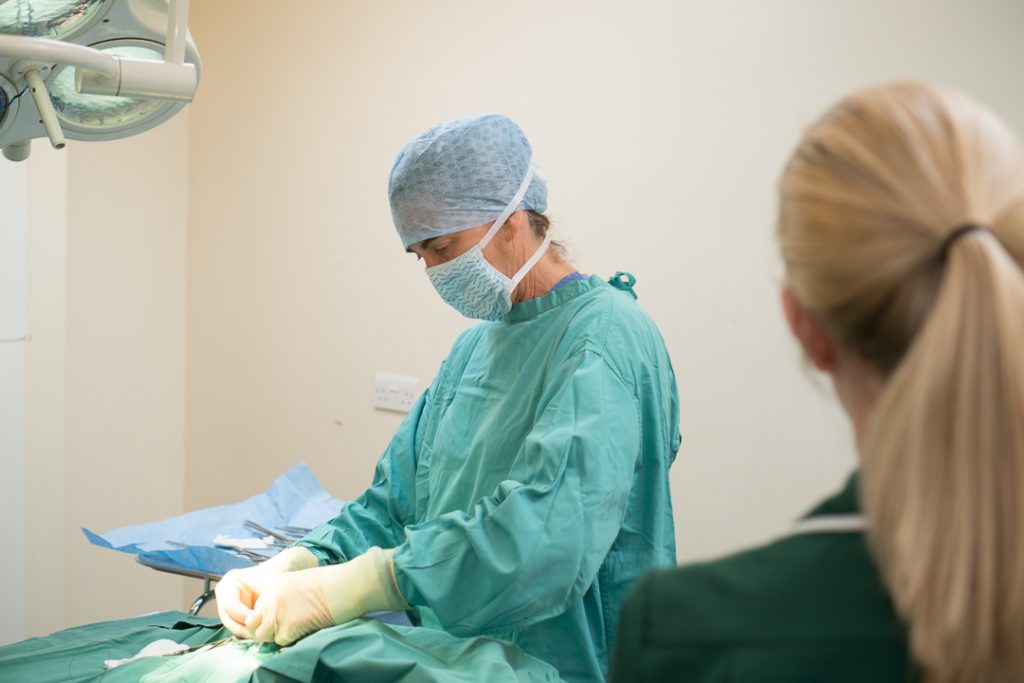
A one year veterinary internship, followed by a three year residency is the most common route to specialisation for vets. While internships were once thought to be largely the preserve of the recent graduate, times have changed and there has been an increase in the number of vets with a few years general practice experience under their belt seeking this route.
Typically, rotating internships involve working with specialists in multiple different disciplines to get a broad grounding in a referral environment. While not all rotations may be of particular interest, important parts of the training are learning what other specialists do as well as gaining an understanding of the collaboration that goes on between different departments. An internship is also an opportunity to establish if a career in referral practice is the right fit for you. Some people thrive on having in-depth knowledge of one particular field, but it doesn’t suit everyone.
The next step on the specialisation ladder is a three year residency. This will predominantly focus on clinical work but with an additional requirement to complete a research project for publication in a peer-reviewed journal. Once the residency is completed and with an RCVS or RCVS-recognised Diploma in the bag, vets may then apply for specialist status. There are some pretty stringent additional requirements that need to be met – for example applicants need to satisfy the RCVS that they make an active contribution to their chosen specialty, have national and international acclaim and publish widely in their field.1 No mean feat. And individuals must reapply every five years to keep their name on the specialist list.
No pain, no gain
Reaching the heady heights of RCVS specialist is a lengthy process that requires dedication and commitment; sacrifices undoubtedly have to be made along the way. Interns and residents work long hours with a heavy workload of complex cases and an often arduous out of hours rota, and all while studying for some of the toughest exams you may have to take as a veterinary professional. The financial rewards in the early years are not great either and it can be difficult seeing your contemporaries climbing the housing ladder and starting families, while you seemingly slave away at the coalface morning, noon and night.
Or should it be looked on as a long term investment, like stocks and shares? You have to take the rough with the smooth and having the opportunity to work with and be trained by leaders in their fields should be relished, laying the foundations for a high-flying career. An awful lot can be gained from an internship or residency, both professionally and personally and a network of contacts acquired that last a lifetime.
Been there, done that
So what do veterinary professionals who have followed the referral route think? Is it possible to have everything? Well internationally recognised specialist in equine surgery, Safia Barakzai BVSc MSc DESTS Dipl. ECVS FRCVS certainly thinks so. “Do it! The route to specialisation takes short term sacrifices – in terms of salary, work-life balance and often geography too. But for me, and all the others I know that have done it, it’s undoubtedly been worth it.“
RCVS recognised specialist in cardiology, Rachel James MA, VetMB, CertSAM, Cert VC, DVC, MRCVS has a similar view. She says, “I think to be a specialist is a different type of pressure. In order to succeed you need to love your subject with a passion. To this day I still find the heart and its function fascinating. It’s tough and pushes you to your limit but that’s the joy.”
Rachel says that juggling family life can be a challenge though. “As a specialist working mother you have to accept guilt; guilt for not being the full time mother, guilt for not being there to pick up from school and accepting that you will miss some special days because you are it… there isn’t anyone else to pass cases to, as many specialists have to work alone in their chosen subject. This is improving as time goes on and we have more specialists. When I got my boards there were only 11 cardiology diplomats in the country.” And her concluding thoughts? “My advice, if you want it, go for it. I adore my job. Is it a hard path as a woman? Absolutely, with children even tougher. Would I do it all again? Definitely.”
Advanced Practitioner Status: a good compromise
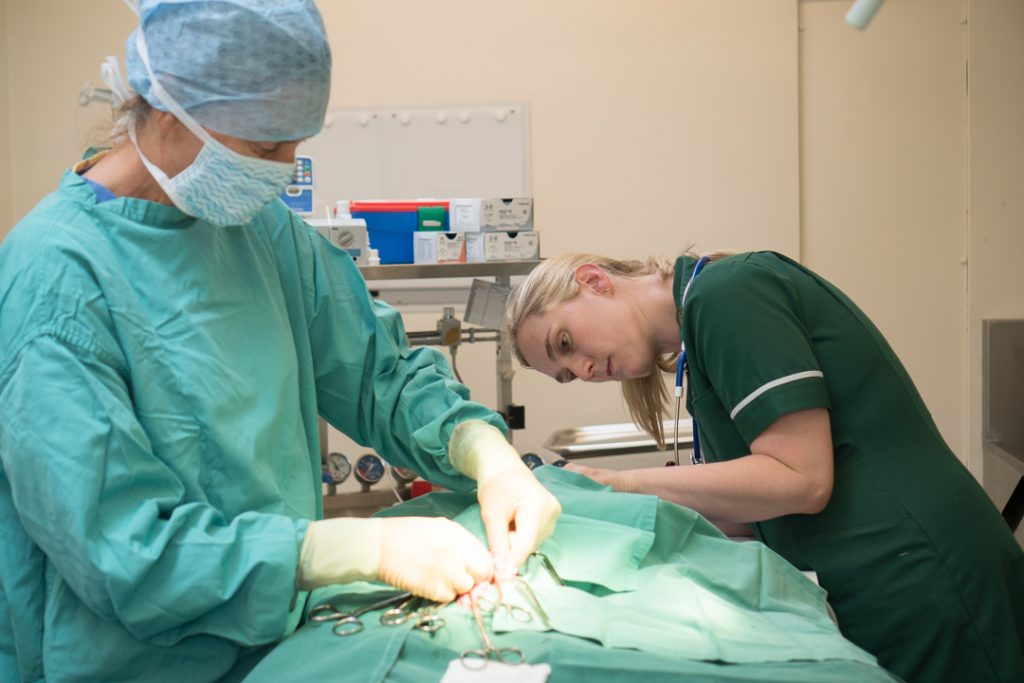
Sometimes even with the best will in the world, the reality is that life gets in the way of big career plans. So what other options are there for following passions and furthering knowledge? Attaining Advanced Practitioner (AVP) status has made developing a particular clinical interest, and gaining some recognition for it, much more achievable in general practice. For many veterinary professionals AVP status presents the ideal compromise. With no need to become entirely dedicated to one particular field, Advanced Practitioners sit somewhere between GPs and specialists. Veterinary professionals can retain their broad general practitioner skill set while also having the additional knowledge to handle more challenging cases in their field of interest; perhaps an ideal middle ground in terms of expertise.
So what does becoming an AVP entail? According to the RCVS, initial accreditation requires an RCVS postgraduate qualification, usually a certificate or diploma, documented CPD and for candidates to be an active practitioner in their selected field. By no means a walk in the park but more attainable than specialist status for many. Workload is still pretty high, with studying on top of an already demanding job. However with no need for the reduction in salary that is associated with internships or residencies, it’s often a more feasible option when mortgages, childcare costs or simply the cost of day-to-day living have to be taken into consideration.
A more challenging choice for women?
In March 2022, employed women with dependent children spent more time on unpaid childcare (averaging 85 minutes a day) and housework (averaging 167 minutes a day) than employed men with dependent children (56 and 102 minutes a day respectively).2 With responsibility for household duties still sitting more with women, embarking on certificates, diplomas or a path to specialisation can be a daunting prospect.
However, there is a wealth of support out there to help. With ready access to paid childcare and domestic help, gone are the days when working parents are expected to do it all. And while the statistics suggest women have greater responsibility for domestic duties than men, attitudes are changing.
Seizing opportunities and doing what you love and what drives you are key parts of making things work. Always had a burning desire to be able to manage those challenging skin cases more effectively? Or maybe it’s that feeling of accomplishment when you get to the bottom of a complex medical case that gets you out of bed in the morning.
With a growing number of women in positions of clinical leadership and many female key opinion leaders across all clinical disciplines, there are an ever-growing number of inspirational role models. Whatever inspires you, follow that dream and who knows where it might take you.
For exclusive access to more stories like this, subscribe to our monthly newsletter
You may also like:
Safia Barakzai on speaking at BEVA Congress, specialisation and starting a business