
By Helen Mason, Leadership Coach and Board Director, Veterinary Management Group (VMG)
Good leadership takes space and time to think strategically rather than just react. Time developing your team and space to notice what’s actually going on in a practice, rather than simply keeping your own head above water.
And yet so many talented women in this profession are leading from a place with almost no space at all, because the domestic and mental load they carry outside of work leaves very little left over.
You can’t lead well at work while carrying an unfair share of the load at home. Not because you’re not capable, but because leadership requires bandwidth – and bandwidth is finite. If it’s all being spent at home before you even reach the practice door, there’s less of you available to lead once you’re there.
Why lists don’t work
One tool that’s helped a lot of people make this load visible is the Fair Play Method, developed by Eve Rodsky. It’s a practical system with 100 cards representing domestic and family tasks, dealt between partners, with each card owned fully from thinking through to doing. I’m a trained Fair Play facilitator, and use the method in my own home, and in my view it works well. But I don’t want to spend this piece walking through the mechanics of a method. I want to look instead at some of the things Rodsky identifies that I think matter more – some of the underlying beliefs that stop fair sharing from happening in the first place, regardless of which method you try.
The best system in the world will still fail if the beliefs underneath it haven’t shifted. This is why just making a list and splitting it between you doesn’t work and ends up in point scoring, resentment and no change.
The beliefs that block fair sharing
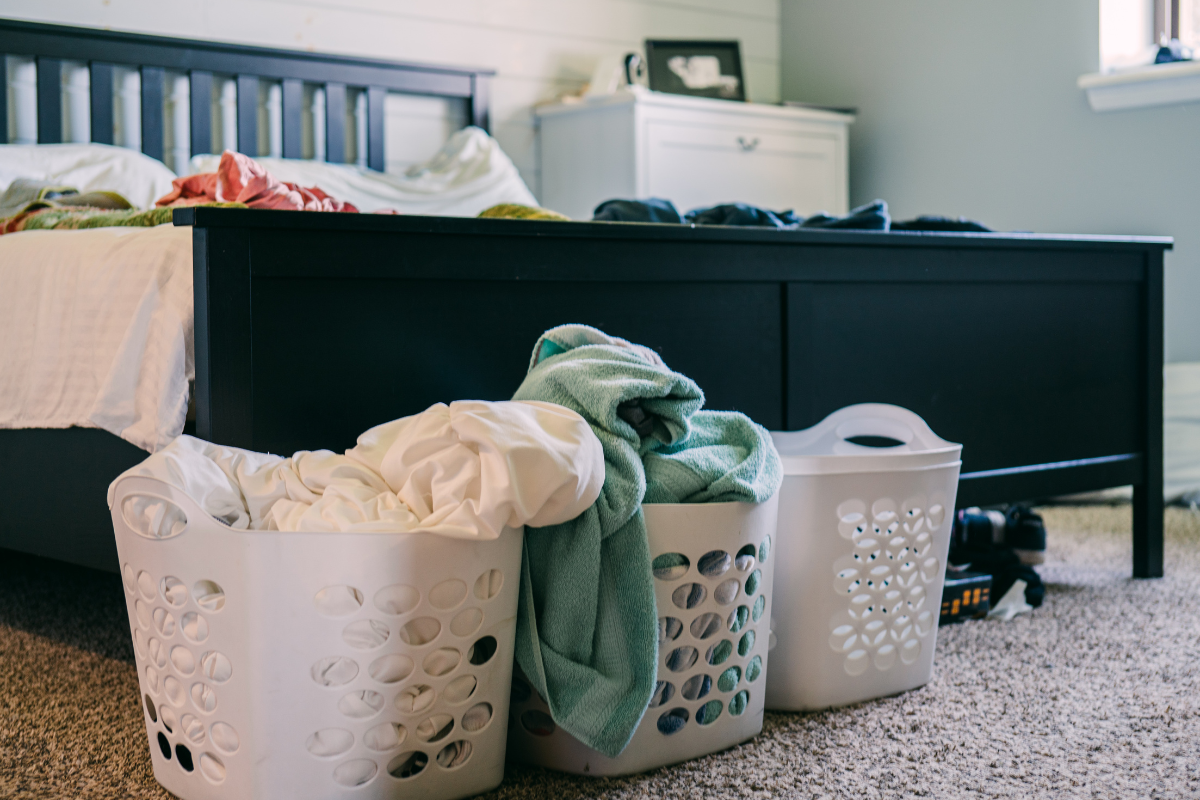
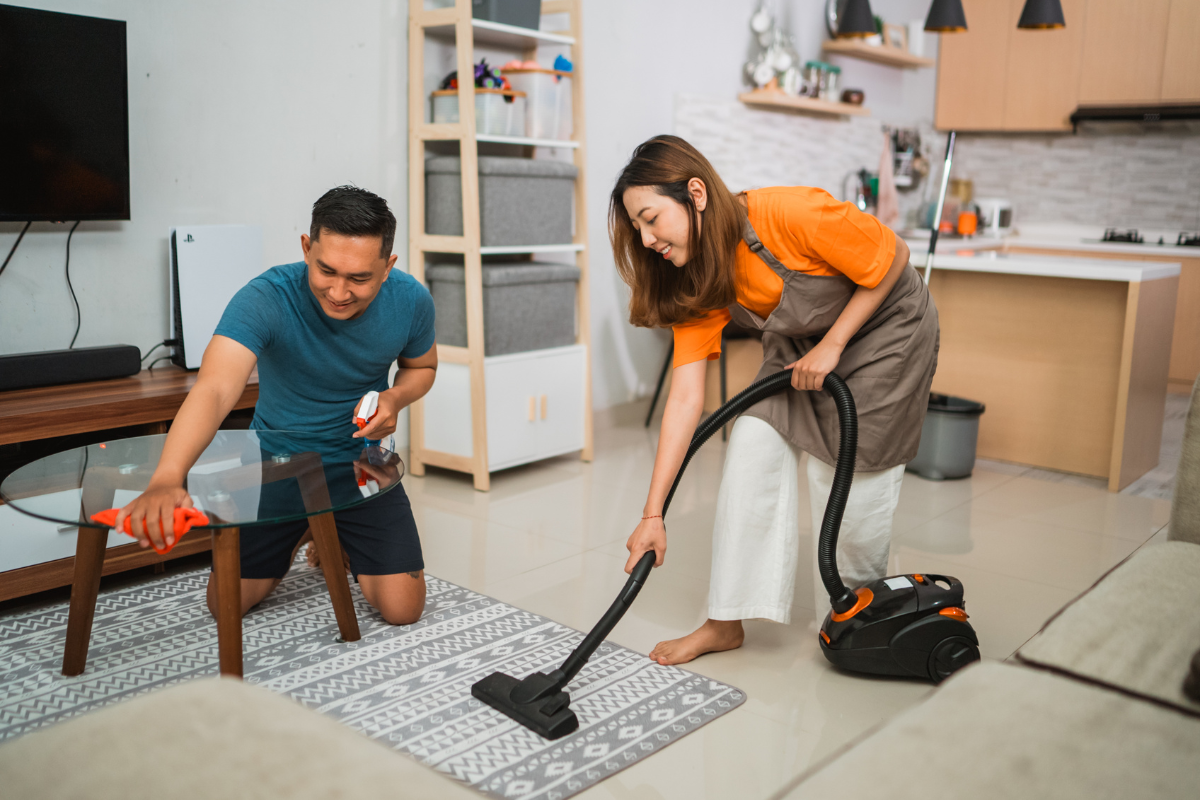
“Whoever earns more, their time is worth more.” This belief sits underneath so much unequal sharing. If one partner’s paid hours are treated as more valuable, unpaid hours in service of the home become the lesser currency, something to be fitted around the “real” priority. Sure, if no one in your household earns money, things unravel pretty quickly. But if no one does the big shop, the laundry and the school run, the consequences are just as significant.
“If you work fewer paid hours, you have more time.” The alternative principle to this idea and the one above is the same – hours spent in service of the home and family are as worthy as hours spent at work. There are 24 hours in every day. Working part time doesn’t create more hours in someone’s day.
“It’s all solved by outsourcing.” Outsourcing (having a cleaner or dogwalker for example) can be a lifesaver. But it still takes work. Someone has to find, enlist, schedule, delegate, pay and maybe even train someone who is outsourced. Interestingly in Eve Rodsky’s work she found NO correlation between outsourced help and less resentment between couples, precisely because outsourcing still takes work.
“The Daily Grind tasks are for her.” It’s common that the person in the female role takes on the tasks that HAVE to be done every day or every week, the laundry or the meal planning for example. These are known as the Daily Grind cards in the Fair Play Method. Whereas the person in the male role has more tasks that can be done when it’s convenient for them – things like home maintenance or organising the storage in the garage.
For the domestic load to be split fairly, the Daily Grind cards need to be split fairly. This gives both partners more choice about how they use their time, leading to them both feeling more respected.
“It’s on me.” We often hold a belief that it’s our job as the woman to do it all and our partner couldn’t possibly help because they work long hours/travel for work/have a stressful job/works from an office whereas I work from home. This message is often reinforced by praise from our partners or others. ‘You’re amazing, I don’t know how you do it all’ – which if you’re a people pleaser can be an addictive glow and make things harder to let go of.
But, as author of the book ‘Drop the Ball: Achieve more by doing less’ Tiffany Dufu says ‘In the digital age, the ‘he’s not here’ complaint no longer exempts men from fully participating in home life…technology can loop them in wherever they are.’ They can order groceries, book the plumber, fill in the school forms, book parties etc, all with the click of the button, wherever they are. Isn’t that how you do it?
“I can do it better and faster.” We often accuse those in the male role of undervaluing the time of those in the female role, but are we just as guilty of undervaluing our capabilities? There are no research data that show women are better multitaskers than men. There’s nothing about testosterone that stops a man organising a kids’ party. Could it also be to do with our need for control? Or our subconscious efforts to meet the impossible standards that say women ‘should’ do some of these tasks?
Is there may be a little bit of you that worries about the judgement from others that you didn’t do it? If you want to regain time, it’s essential to let go of the multitasker role.
Fair is not 50:50
None of this is an argument for splitting everything down the middle. Fair Play’s central premise is that the goal isn’t equal division of tasks – it’s about fairness, and your version of fair is not the same as anyone else’s. What matters is that both people genuinely feel the load is shared, understood, and valued by making the invisible, visible, and thereby giving it value. Chasing an even split can become its own trap, another form of scorekeeping that misses the point.
Why this belongs in a leadership conversation
If you want to lead well – think clearly, develop your team, spot what’s coming rather than firefight what’s already arrived, you need space in your life to do it. For a lot of women, that space simply won’t appear until the domestic and mental load at home is more fairly shared.
This isn’t a small ask. But it might be one of the most important things you do for your leadership all year. And it starts at home, long before you reach the practice.
The Fair Play Method referenced here was developed by Eve Rodsky. Her book, Fair Play, is well worth reading in full.
If you’re looking for space to think and perhaps even a space to solve problems collaboratively with your peers, why not join the VMG and participate in its ShareSPACE sessions? Find out more here.

Helen Mason
Helen is an executive coach specialising in Women’s Leadership and Working Parents. A certified team coach, she also focuses on enhancing performance within teams. Before moving into coaching, Helen held senior marketing roles at veterinary businesses including Vetoquinol, MSD Animal Health and IVC Evidensia.
She’s a director of the Veterinary Management Group (VMG), the professional body for those in leadership and management roles across the veterinary sector
Don’t forget to sign up to our monthly newsletter for exclusive content and news from Veterinary Woman!
You may also like:
Veterinary Woman Role Model – Helen Mason
Promoting learning and growth: the inspirational stories of the women behind the VMG
The Power of Intention – Veterinary Leadership in a Micro-Moment