
For busy vet practices, a pricing complaint, clinical misunderstanding or negative social media post can come completely out of the blue, and if not managed correctly can quickly escalate into a reputational crisis.
And when a crisis unfolds, practice leaders are expected to make big decisions, quickly. Without an agreed plan, even a well-intentioned response has the potential to create further confusion or open the door to scrutiny.
Companion Consultancy, a specialist PR and communications agency for the veterinary and animal health sector, has launched the Crisis Compass to help practices prepare before that pressure hits. The crisis prevention and communication service begins by assessing a practice’s individual risk profile, providing feedback to mitigate risks, and producing a bespoke crisis plan, including pre-drafted statements and a step-by-step playbook of what to do if a crisis occurs.
Why crisis preparation matters
Most crises can be prevented, with robust internal policies and communication. However, in a busy practice, housekeeping can slip and issues can creep in. Taking a thorough look at the internal culture and remembering that “a stitch in time saves nine” is the essential first step in being prepared. Taking steps to address risks and fix them before they can escalate further is something all practices should be doing regularly.
Beyond that, being prepared and having a plan of what to do in the face of a crisis is essential.
A veterinary crisis
As technology develops at a rapid rate, complaints are no longer confined to word-of-mouth conversations. Now, an unhappy client can easily take to social media, online reviews or community noticeboards to share their opinions with thousands with just one sentence. Alongside this, continuing public scrutiny of veterinary pricing, transparency and ownership resulting from the recent CMA investigation has made client trust an increasingly important issue for practices across the profession.
“We built the Crisis Compass because we repeatedly saw practices being hurt by negative online stories that spread faster than they could respond to. As vets ourselves, we have used our lived experience of working in practice along with our expertise in communications to create a service we genuinely believe will help.”
Fiona Farmer, Director at Companion Consultancy
The effects of a crisis also reach beyond just reputational risk. Experiencing a crisis and handling negative comments can have a big impact on individuals within the veterinary team, particularly those who are directly involved or already experiencing pressure or stress at work. The knock-on effects can have a significant impact on both workplace effectiveness and the wellbeing of the team. A clear plan can help practice leaders remain calm, and handle to crisis smoothly, reducing the negative impact to the team.
Test your practice’s readiness
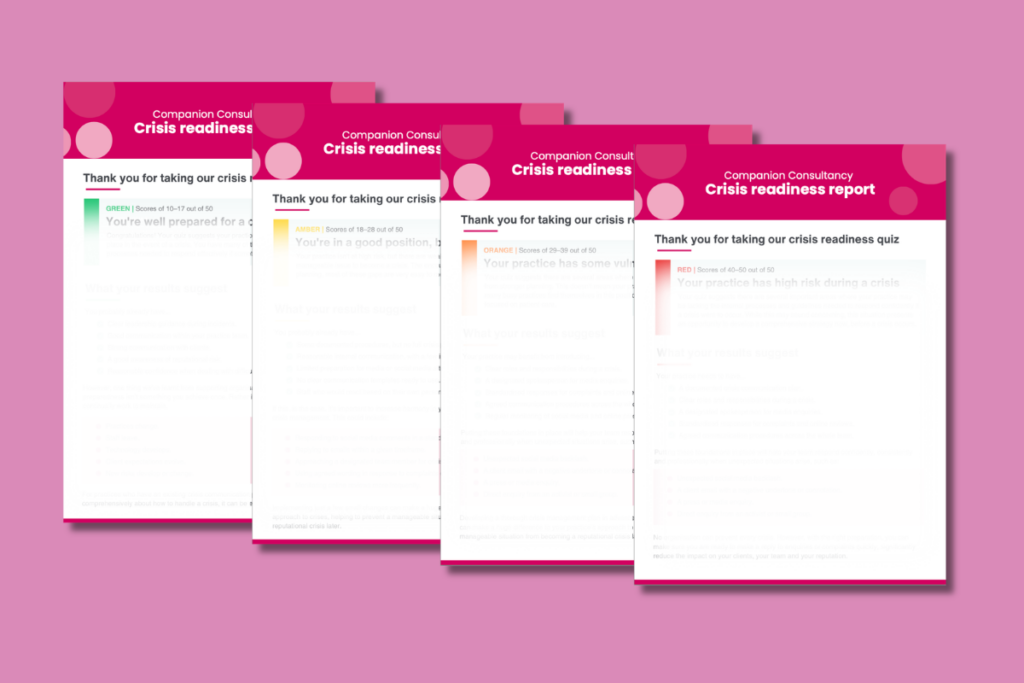
As part of its new service launch, Companion Consultancy has developed a free quiz to help veterinary teams better understand their level of crisis risk and identify potential gaps. Once completed, all quiz participants will receive a complementary PDF of recommendations for crisis readiness preparation.
You can take the quiz here: https://bit.ly/crisis-quiz.
The Crisis Compass is available now to veterinary practices and veterinary groups across the UK. Further information is available at https://crisis.companionconsultancy.co.uk.
About the Author

For more than 20 years, the Companion Consultancy team has been supporting veterinary and pet health businesses with their marketing and PR needs. Led by three vets who have lived and breathed clinical work, they know the intricacies of the veterinary industry like the back of their hands and are always there with advice, whether it’s a crisis or an opportunity.
Contact Companion Consultancy: www.companionconsultancy.co.uk
Don’t forget to sign up to our monthly newsletter for exclusive content and news from Veterinary Woman!
You may also like:
Social Media in Practice: Building a Strong Online Community
Why does your practice need strong relationships with the local media?
AI in veterinary medicine: Giving time back to the profession