
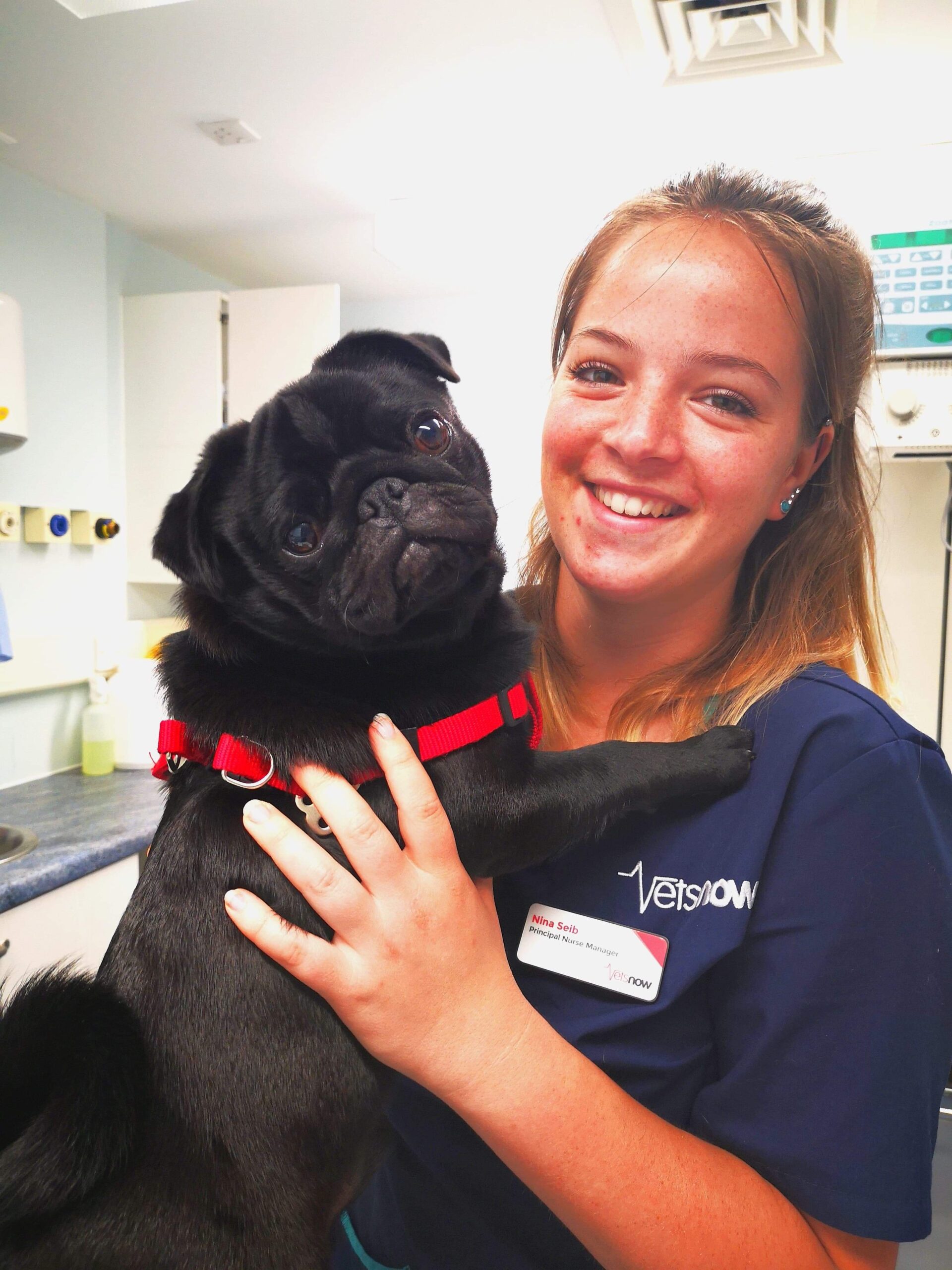
For some people, leadership is something they grow into over time. For RVN Nina Seib, it has always been the direction she wanted to take. Long before qualifying as a veterinary nurse, she found herself naturally taking responsibility, supporting colleagues and looking for ways to improve the working environment around her.
Today, as an Area Director at Vets Now, responsible for 10 emergency veterinary clinics, Nina believes the greatest impact she can have is not only through the patients she treats herself, but by helping the people around her succeed. Along the way, she has navigated self-doubt, early leadership responsibilities, motherhood and significant family challenges; all experiences that have shaped an empathetic leadership style focused on inclusion, collaboration and helping others thrive.
Nina’s nursing career started after graduating from the Royal Veterinary College in 2015, going on to work in a first opinion practice where she soon became head nurse. Wanting more exposure to emergency cases, she moved to Vets Now three years later. “When I got the chance to become Principal Nurse Manager, mixing my passion for ECC while taking on a leadership role pretty much made it my dream job. I really enjoy being able to help people, make a difference to improve their job satisfaction which hopefully means people have better longevity in their careers.”
Nina’s progression has seen her move from Principal Nurse Manager to an Area Director role in which she is responsible for 10 clinics in her area. She works from home but regularly gets out to see all her teams in person. “I always end up taking bloods or scrubbing in to help out with the nursing,” said Nina. “I like to stay close to it and keep my hand in. As a director, I feel the best way I can support my teams is by being part of the team.”
By staying close, as well as taking on all the strategic overviews and planning decisions, Nina looks to share best practice. If something works well at one clinic, she’s keen to spread that to the others. “The thing I get most out of is the people side and feeling that I’m making a difference,” said Nina. “I want us all to be doing great things.”
Discovering the impact of leadership
Nina realised that leadership was where she could have the biggest impact when she was studying to become a nurse. “The positive attributes of some of my clinical coaches really helped to shape how I wanted to be as a role model and leader. From there, I knew I wanted to be closely involved in nurse training, and so became a clinical coach myself.”
As a nurse in a day clinic, Nina could see lots of opportunities for improving processes and team cohesion, and noticed that a lack of a structured feedback systems was leading to a clinic culture of gossiping. “I felt like I could make a difference by helping to implement some more structure for my team. By giving them a regular space to be listened to, I could provide support and hear their ideas for change and what training they needed.
“I have always cared about fairness and consistency and wanted to show this in a caring way. I felt that leadership would allow me to make a positive difference within my team.”
As Nina went into leadership early in her career, becoming a Head Nurse in a clinic where others had been qualified for longer, she experienced some self-doubt about whether she was the best person for the job.
“I overcame this by deciding that the best way to move forward would not be to direct change based on my own ideas, but instead to have an open forum to discuss the team’s ideas and allow them to have ownership of the changes we would implement. This allowed people to realise I was approachable rather than authoritarian, and created an inclusive environment where everyone could shine and be accountable.”
Growing through opportunity
Nina’s leadership has been hugely enhanced by the opportunities she has been able to take on. These include funding for her CertVN ECC, which she then went on to tutor, and serving as an OSCE examiner. Most recently she has completed inspiring vet care’s (formerly IVC Evidensia) Artemis Emerging Leaders programme, a cross-company leadership development programme open to staff throughout the IVC network.
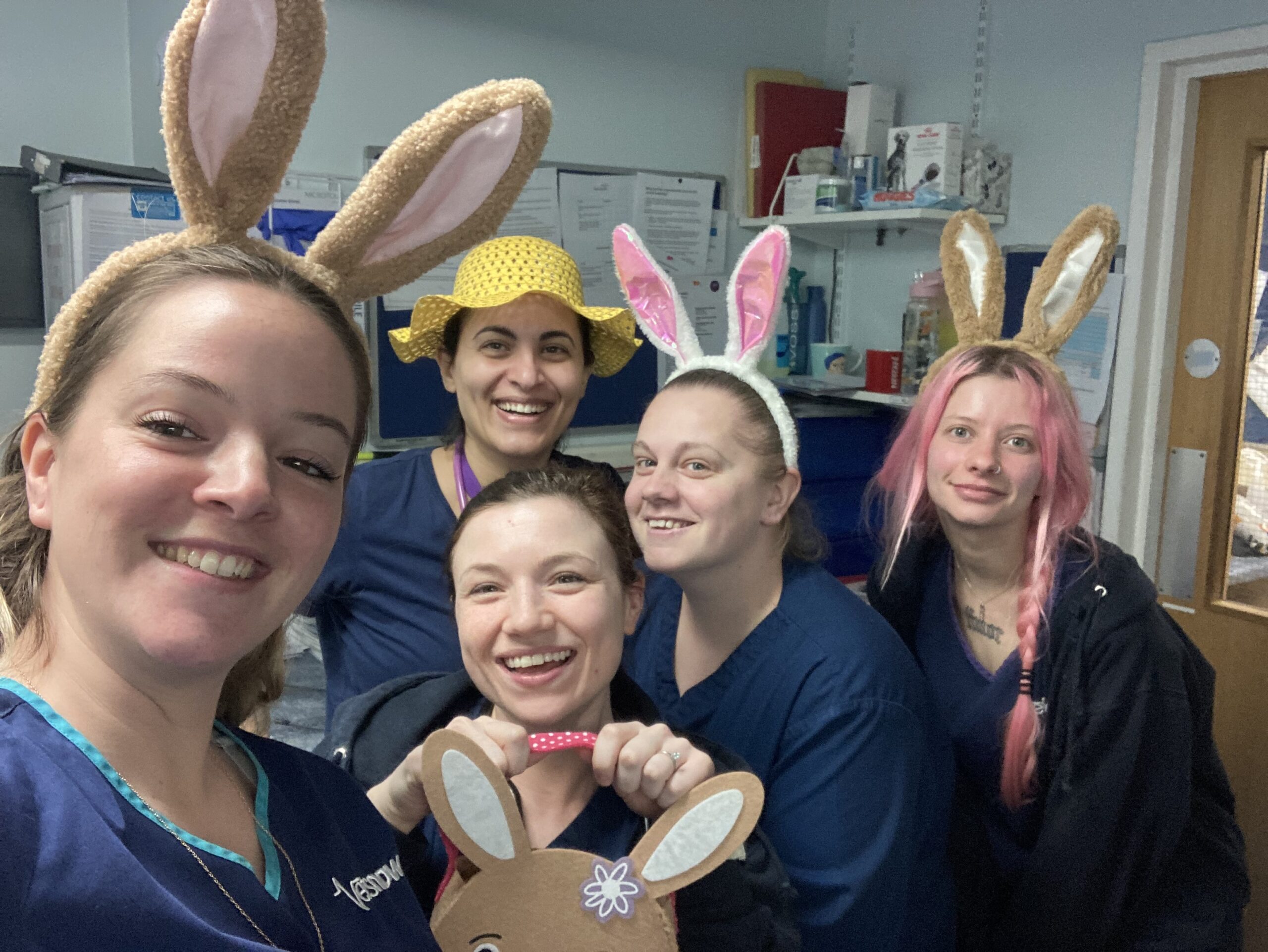
“Relatively speaking, only a handful of people are selected, so I was really pleased and excited to go on that,” said Nina. “I met a lot of other leaders within the business, took part in workshops and did a presentation on neurodiversity at the end of it. I learned so much and I think it demonstrates how many amazing avenues there are for nurses. You might think there are only certain levels you can progress to, but so many doors are open to you.”
Nina reflects that the hardest leadership lesson is when you get something wrong. “You have to remind yourself that you are always making choices for the right reasons, even if sometimes this results in the wrong or inadvertent outcome. I have also learnt it is always important to hold your hands up when you make a mistake, own it and show your team how you are going to reflect and learn from this, just as you would ask your team to.”
“I have also found it is very tricky trying to balance being a good leader and being there for your team, while not sacrificing your home life and the needs your family have of you too.”
Leading with empathy
Nina has enjoyed flexibility during her time at Vets Now, stepping her hours down and up as family life demanded, and taking the right level of maternity leave. “I took six months after I had my daughter and a full year after having my son,” said Nina. “He had to have open heart surgery at four days old which was obviously a big thing to go through when I had a 19-month-old who needed me. But I felt like everyone had their arms around me and I had all the support and flexibility I needed. So many of the principal staff have kids and we’re all there for one another.”
The experience of becoming a parent had an effect on the way Nina leads others. “I think I learned to be a lot more patient and understanding of people’s diversities and differences,” she reflects. “It was always something I felt I had an awareness of, but since becoming a mother to my children, who have their own health challenges and neurodiversities, it has made me more passionate about ensuring we offer an inclusive environment in the work space and really emphasise people’s strengths. I even helped develop the Neurodiversity Training for Line Managers based on this and presented on Neurodiversity in the Workplace as part of inspiring vet care’s Leadership programme.”
“I have always cared about fairness and consistency and wanted to show this in a caring way. I felt that leadership would allow me to make a positive difference within my team.”
To other RVNs who are interested in leadership but don’t necessarily see themselves as “a leader”, Nina offers the advice to consider completing a DISC profile. “There are many attributes that make good leaders, but the first thing that has to be there is the desire to lead. If you have this passion but are struggling with self-doubt, then leadership courses can be a great place to start. But also reach out to your peers to help you reflect on your own strengths and weaknesses that you can build on.”
Leadership may have been Nina’s ambition from an early age, but her experience has reinforced that good leadership isn’t about authority or hierarchy. Instead, it is about listening, creating opportunities for others and building a workplace where people feel supported to succeed. As her career has progressed, that motivation has remained constant.
When you’re a leader in a business or a team, you’re not only listening to the concerns people have, but you’re able to act and make a difference.”
Don’t forget to sign up to our monthly newsletter for exclusive content and news from Veterinary Woman!
You may also like:
The Power of Intention – Veterinary Leadership in a Micro-Moment
Optimising women in veterinary leadership as a whole-organisation performance strategy
Evolving to Succeed: Why Adaptability Is Now Essential in Veterinary Leadership